Research
Peer-reviewed articles and book chapters
Women, law and legal work in twentieth-century Scotland (Edinburgh University Press, forthcoming)
Read here: ‘The fight continues’, Women, Law and Legal Work in Scotland: Dialogues about our Past, Present and Future, eds Catriona Cannon, Maria Fletcher, Rachel McPherson, Charlie Peevers and Seonaid Stevenson-McCabe (Edinburgh, forthcoming).
Women in the courts in early modern Scotland (Edinburgh University Press, 2024)
This book chapter builds on reflections raised in Elizabeth Ewan’s 1992 seminal essay ‘Scottish Portias’ by returning to the position and treatment of Scottish women in early modern legal sources to better understand women’s varied interaction with the courts in daily life. It re-examines the view of women held by early Scottish men of law, with particular focus on the legal status of married women, and considers their treatment by and participation in the Scottish legal system at a local and central level. It challenges some previous conclusions on the relationship between married women and the law, arguing that married women’s access to justice in early modern Scotland was considerably more fluid and multi-layered than has been previously recognised. It concludes by calling for a closer consideration of women’s rights within standard narratives of classical Scottish legal history and mainstream Scottish history.
Read here: ‘”Scottish Portias” Revisited: Women in the Courts in Early Modern Scottish Towns,’ Gender in Scotland, 1400-1800: Place, Faith and Politics, eds Mairi Cowan, Janay Nugent and Cathryn Spence (Edinburgh: Edinburgh University Press, 2024), 31-47.
Women in the courts in early modern Scottish towns (Edinburgh University Press, 2024)
This chapter builds on reflections raised in Elizabeth Ewan’s 1992 seminal essay ‘Scottish Portias’ by returning to the position and treatment of Scottish women in early modern legal sources to better understand women’s varied interaction with the courts in daily life. It re-examines the view of women held by early Scottish men of law, with particular focus on the legal status of married women, and considers their treatment by and participation in the Scottish legal system at a local and central level. It challenges some previous conclusions on the relationship between married women and the law, arguing that married women’s access to justice in early modern Scotland was considerably more fluid and multi-layered than has been previously recognised. It concludes by calling for a closer consideration of women’s rights within standard narratives of classical Scottish legal history and mainstream Scottish history.
Read here: ‘”Scottish Portias” revisited’: women in the courts in early modern Scottish towns,’ eds by Mairi Cowan, Janay Nugent and Cathryn Spence, Gender in Scotland, 1200-1800: Place, faith and politics, (Edinburgh University Press, 2024). 33-47.
Scottish women’s and gender history and women historians in Scotland: past, present and future directions (Scottish Historical Review, 2023)
The Royal Historical Society’s Gender Equality report in 2018, as well as a number of smaller surveys, suggests that while women now make up a significant proportion of those studying advanced degrees in history, they remain under-represented both in academic institutions (especially at higher levels) and in journals and similar high-esteem publications. Women’s and gender history has been one subfield where this is not the case; if both men and women have written on this topic, women have largely dominated the field and women’s and gender history remains a significant site where women’s authoritative knowledge has been prized and their leadership recognised. This special issue celebrates Scottish women’s and gender history as a domain of history where questions of power and authority, inclusion and exclusion, work, labour and knowledge production have already been considered through a gendered lens. Our authors bring case studies from a diverse range of time periods and historical contexts, but they share a commitment to central questions of how women—throughout history and as historians—have produced space for their authoritative knowledges and practices, how these might be nurtured or constrained, and the ongoing implications for gender equality.
Read here: ‘Scottish Women’s and Gender History and Women Historians in Scotland: Past, Present and Future Directions‘, (with Katie Barclay), Scottish Historical Review, 102:2 (2023), 187–210.
Coercion or consent? women, property and legal authority in early modern Scotland (Scottish Historical Review, 2023)
During the early modern period women’s ownership of property was significantly constrained by the marital relationship. Scots law stipulated that much of a woman’s property passed to her husband on marriage and that her ability to sell, control or dispose of much property without her husband’s consent was severely restricted. Yet, despite such strict legal rules, jurists were aware that a married woman could be placed in a difficult position if her husband abused his position, with legal procedures introduced to mitigate a husband’s extensive property powers. As a result, a husband could not sell land his wife brought to the marriage, or any land they held jointly, without her consent, indicated by her signature or mark on the deed and her declaration in a private examination that she acted under her own free will and not under coercion or pressure from her husband. This article interrogates the legal requirement of the wife’s consent in Scots law from two conflicting positions: first, as a restraint on the husband’s administrative powers in that she was entitled to openly challenge a mortgage or sale; and second, as an endorsement of the husband’s superior position in that she was most likely unable to publicly challenge her husband’s patriarchal authority during his lifetime. In doing so, it argues that women’s legal authority in early modern Scotland was complex and, at times, contradictory, and that this legal ambiguity entitled the courts to make decisions that routinely looked beyond fixed rules when women’s property rights and patriarchal rules overlapped.
Read here: ‘Coercion or Consent? Women, Property and Legal Authority in Early Modern Scotland,’ Scottish Historical Review, 102:2 (2023), 232–253.
Property over patriarchy? remarried widows as litigants in early modern Scotland (Routledge, 2022)
This edited collection, written by both established and new researchers, reveals the experiences of litigating women across premodern Europe and captures the current state of research in this ever-growing field. Individually, the chapters offer an insight into the motivations and strategies of women who engaged in legal action in a wide range of courts, from local rural and urban courts, to ecclesiastical courts and the highest jurisdictions of crown and parliament. Collectively, the focus on individual women litigants – rather than how women were defined by legal systems – highlights continuities in their experiences of justice, while also demonstrating the unique and intersecting factors that influenced each woman’s negotiation of the courts. Spanning a broad chronology and a wide range of contexts, these studies also offer a valuable insight into the practices and priorities of the many courts under discussion that goes beyond our focus on women litigants. Drawing on archival research from England, Scotland, Ireland, France, the Low Countries, Central and Eastern Europe, and Scandinavia, Litigating Women is the perfect resource for students and scholars interested in legal studies and gender in medieval and early modern Europe.
Read here: ‘Property over Patriarchy? Remarried Widows as Litigants in the Records of Glasgow’s Commissary Court, 1615-1694,’ Litigating Women: Gender and Justice in Europe, c.1300-c.1800, eds Teresa Phipps and Deborah Youngs (London: Routledge, 2022), 133-151.
Married women’s wills and testaments in early modern Scotland (Routledge, 2021)
This interdisciplinary volume discusses the division of the early modern material world into the important legal, economic, and personal categories of mobile and immobile property, possession, and the rights to usufruct. The chapters describe and compare different modes of acquisition and intergenerational transfer via law and custom. The varying perspectives, including cultural history, legal history, social and economic history, philosophy, and law, allow for a more nuanced understanding of the links between the movability of an object and the gender of the person who owned, possessed, or used it. Case studies and examples come from a wide geographical range, including Norway, England, Scotland, the Holy Roman Empire, Italy, Tyrol, the Ottoman Empire, Greece, Romania, and the European colonies in Brazil and Jamaica. By covering both urban and rural areas and exploring all social groups, from ruling elites to the lower strata of society, the chapters offer fresh insight into the division of mobile and immobile property that socially and economically posed disadvantages for women.
Read here: ‘Married Women’s Testaments: Division and Distribution of Movable Property in Seventeenth-Century Glasgow’, Gender, Law and Material Culture: Immobile Property and Mobile Goods in Early Modern Europe, ed Annette Cremer (London: Routledge, 2021), 64-90. Awarded ‘runner-up’ in the 2021 Royal Historical Society’s David Berry Prize.
The communities and margins of early modern Scotland (Journal of Northern Renaissance, 2021)
This special issue of the Journal of Northern Renaissance examines the history and cultural production of early modern Scotland through consideration of its ‘communities’ and ‘margins’. These are notions that permeate the literature but have not yet been explored either individually, as analytical categories, or, until now, together as a defined theme. For this period, historians have frequently conceived of unique, Scottish communities, yet marginality is also ever-present. Work on pre-modern Scotland must negotiate unique tensions between communal Lowland identities and a Gaelic-speaking Highland ‘fringe’. Equally, it must also address a longstanding awareness that Scottish events, ideas, and experiences during this period have often been marginalized within ‘British’ and European narratives. The application of a theme specifically addressing community and marginality, therefore, holds obvious significance for early modern Scotland.
Read here: ‘The Communities and Margins of Early Modern Scotland,‘ Journal of the Northern Renaissance, 12 (2021).
Women, marital status and law in early modern Glasgow (Journal of British Studies, 2019)
Early modern women are often categorized by historians in relation to their marital status—whether they appeared as single, married, or widowed women. These identifications reflected the effects of marriage on women’s legal and social status. Focusing on the records of the burgh and commissary courts of seventeenth-century Glasgow, this article shows how Scottish women’s legal status existed instead on a “marital spectrum,” including liminal phases prior to the formation of marriage as well as overlapping phases following remarriage after the death of a spouse. This spectrum situates women’s legal claims in relation to their marital career, allowing for a closer reading of women’s legal activities. Court clerks working in Glasgow documented women’s varied marital, familial, and legal identities within the court records, a Scottish practice that can shed new light on how women negotiated the boundaries of justice in early modern courts of law.
Read here: ‘Women, Marital Status and Law: The Marital Spectrum in Seventeenth-Century Glasgow’, Journal of British Studies 54: 8, (2019), 787-804.
Married women’s paraphernalia in early modern Scotland (Routledge, 2018)
This book offers a comparative perspective on Northern and Southern European laws and customs concerning women’s property and economic rights. By focusing on both Northern and Southern European societies, these studies analyse the consequences of different juridical frameworks and norms on the development of the economic roles of men and women.
Read here: ‘Married Women, Property and Paraphernalia in Early Modern Scotland’, Gender, Law and Economic Wellbeing in Early Modern and Modern Europe, eds Anna Bellavitis and Beatrice Zucca Micheletto (London: Routledge, 2018), 200-214.
Book reviews
I have reviewed books for Law and Humanities, Women’s History Review, the Journal of Family History, Cultural and Social History, Continuity and Change, Reviews in History, the Innes Review and Scottish Historical Review.
Public History
‘What’s in a surname?‘, History Workshop Magazine
In Britain today, 9 out of 10 women marrying men will change their name on marriage. Here I discuss the history of female name changing after marriage in Britain, arguing that reference to tradition is not necessarily rooted in history.
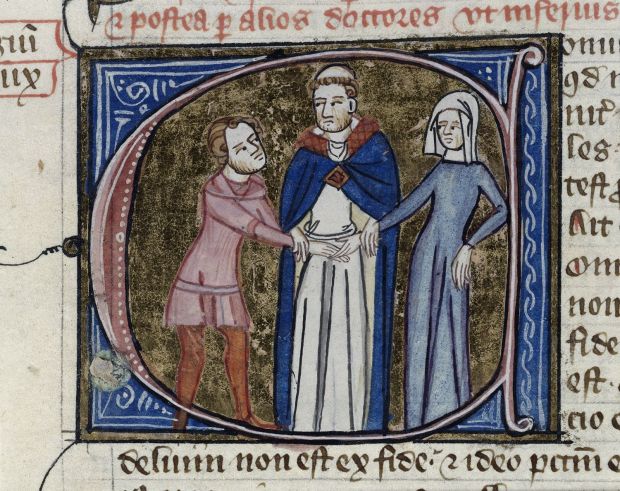
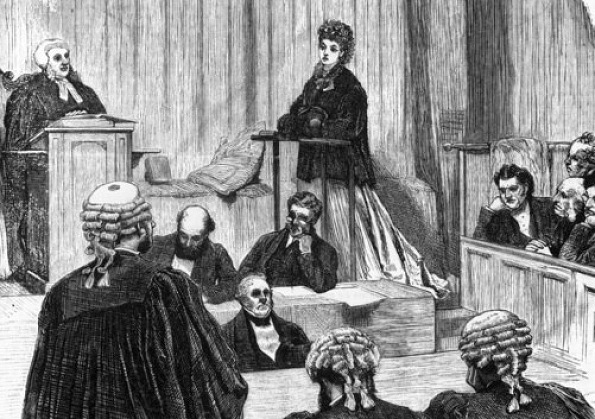
‘Divorce and women’s rights in Scottish history‘, Engender
Here I explore the complex history of divorce law in Scotland in the context of married women’s rights.
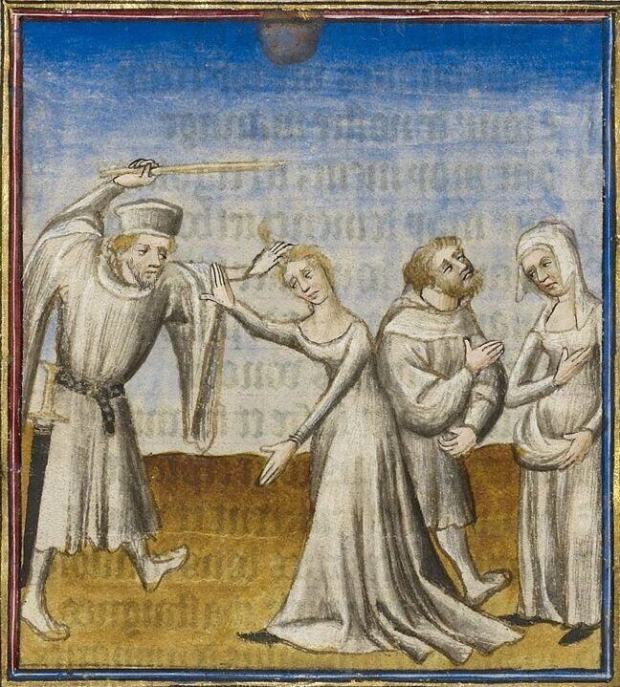
Violence against women in early modern Scotland, FutureLearn
Whether it happened behind closed doors or openly in public spaces, violence against women in intimate relationships occurred as much in the past as it does today. But modern terms like ‘domestic abuse’ or ‘intimate partner violence’ do not easily translate across history.
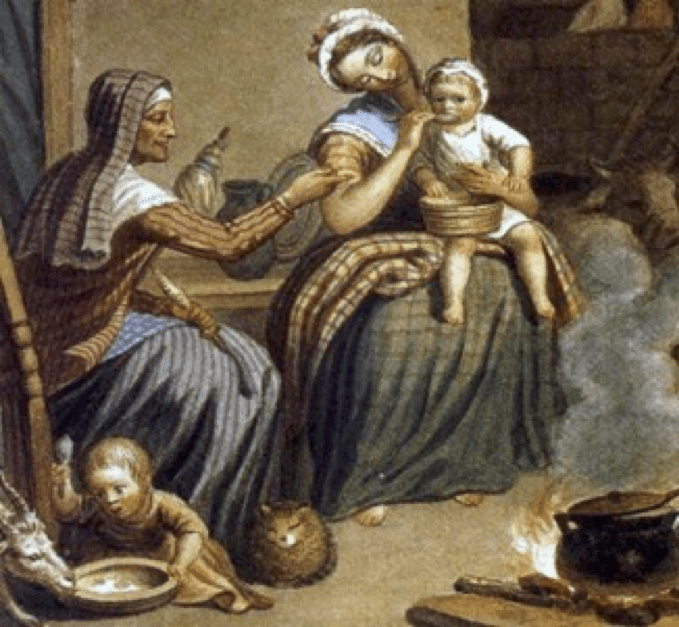
Blended families and childcare in early modern Scotland, FutureLearn
The idealistic construction of the nuclear family – which has been upheld as the cultural ideal – is beginning to be challenged.
‘Women accessing justice in early modern Scotland’, Women’s History Network
Here I reflect on my research on women’s navigation of legal systems and property relationships in early modern Scotland.
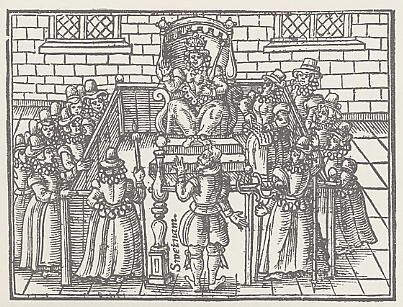
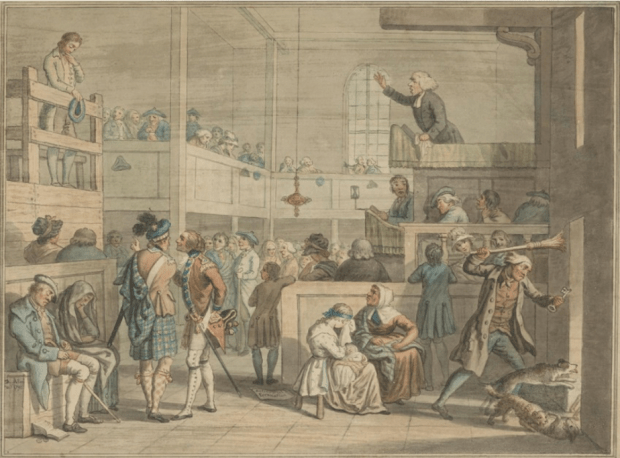
‘Cohabitation in Scotland: Lessons from history‘, School of Law Blog
Here I trace the long history of cohabitation in Scotland from the early modern period to the present day and investigate the changing effects of cohabitation on the property rights of Scottish women throughout history.
Research Reports
The Young Women’s Movement, Status of Young Women in Scotland 2024-25: Gender Justice and Young Women’s Human Rights (2025).
The Young Women’s Movement and Scottish Women’s Budget Group, “I am just keeping my head above water”: Young women’s experiences of the cost-of-living crisis (2024).
 Dr Rebecca Mason